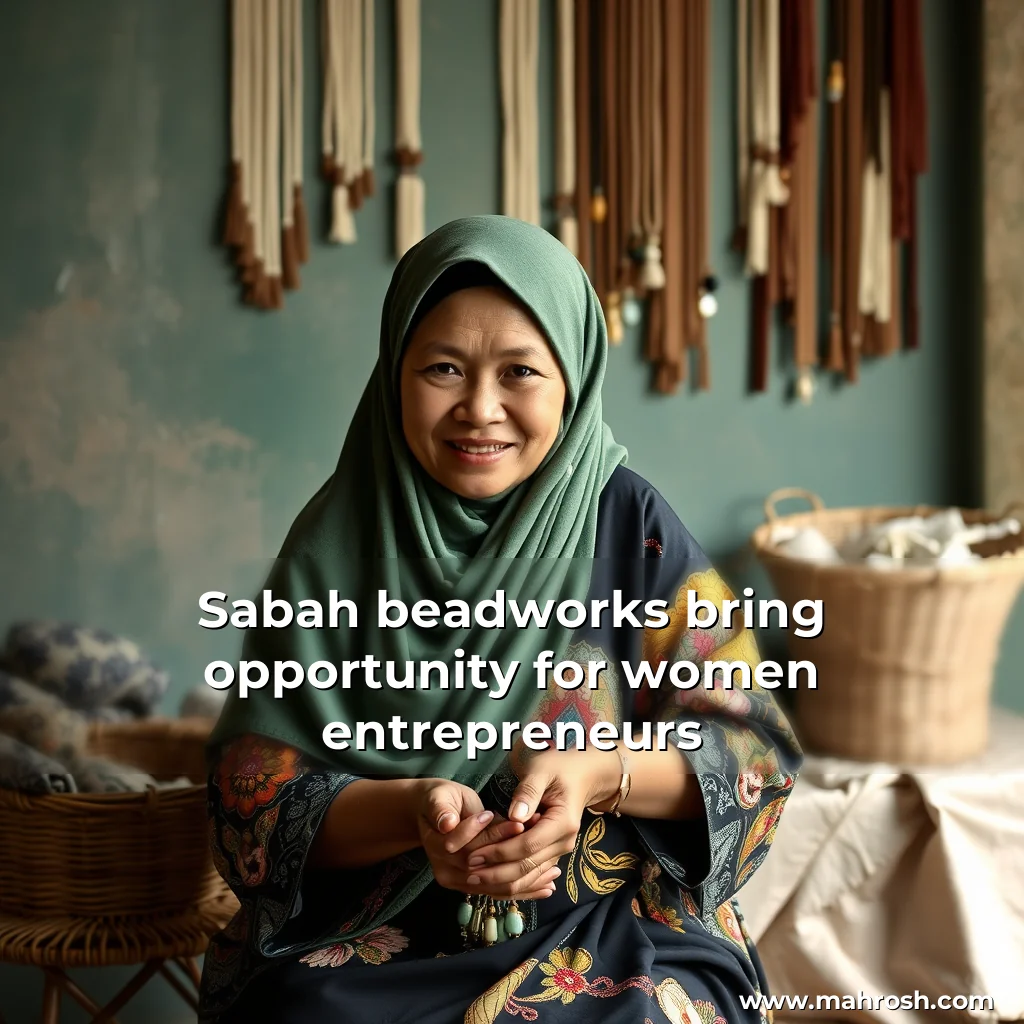
The beadwork is made from a variety of materials, including shells, seeds, and other natural materials.
The Art of Rungus Weaving
The Rungus people of Sabah, Malaysia, have been weaving intricate and vibrant cloths for generations. Their traditional weaving technique, known as linangkit, is a testament to their rich cultural heritage. The linangkit loom is a simple, backstrap loom that allows the weaver to create complex patterns and designs.
Materials and Techniques
The Rungus people use a variety of materials to create their beadwork, including:
These materials are carefully selected and prepared to create the desired pattern and design. The weavers use a combination of techniques, including:
Storytelling through Beadwork
The beadwork of the Rungus people is not just a decorative art form, but also a means of storytelling.
Modern designers have incorporated various materials and colors into the traditional design, making it a statement piece in contemporary fashion.
The Origins of the Pinakol
The pinakol has its roots in traditional African fashion, specifically in the cultures of West Africa.
The smaller versions are often referred to as the “mini” or “baby” versions of the Rungus beaded necklace.
The Origins of the Rungus Beaded Necklace
The Rungus beaded necklace has a rich history that dates back to the 19th century.
She was inspired by her own experiences as a Korean-American woman navigating cultural identity and belonging.
The Birth of Borneo Divas
Mariah Airens Doksil’s journey to creating Borneo Divas began with her own experiences as a Korean-American woman. Growing up, she struggled to find her place within the Korean-American community, feeling like an outsider among her peers. This sense of disconnection led her to explore different cultures and traditions, which eventually inspired her to create a line of accessories that celebrated ethnic diversity.
The Concept of Borneo Divas
Borneo Divas is a line of accessories that draws inspiration from various ethnic cultures, including Korean, African, and Southeast Asian traditions. The brand’s name, Borneo, refers to the island of Borneo, which is home to diverse cultures and traditions.
The Vision Behind Projek Manik-Manik
Projek Manik-Manik is a community-driven project that aims to empower women, particularly mothers, by providing them with the skills and resources needed to improve their livelihoods. The project’s vision is to create a sustainable and self-sufficient community where women can take control of their lives and make informed decisions about their future. Key objectives of Projek Manik-Manik: + To provide women with the skills and knowledge needed to start and run their own businesses + To promote economic empowerment and independence for women + To create a supportive community where women can share knowledge, resources, and experiences
The Role of Borneo Divas
As part of Projek Manik-Manik, Borneo Divas plays a crucial role in supporting the makers by providing them with the necessary materials and advising on color palettes. Our team of experts works closely with the makers to ensure that the final products meet the highest standards of quality and aesthetic appeal. How Borneo Divas supports the makers: + Providing materials and resources + Advising on color palettes and design + Offering guidance on production and packaging + Collaborating with the makers to ensure the final product meets the project’s vision
The Impact of Projek Manik-Manik
Projek Manik-Manik has a significant impact on the lives of the women involved in the project.
The Evolution of Sabah’s Cultural Attire
Sabah, a state in East Malaysia, is known for its rich cultural heritage, which is deeply rooted in its indigenous communities. The traditional attire and accessories of Sabah have undergone significant changes over the years, influenced by various factors such as colonialism, globalization, and modernization.
The Influence of Colonialism
During the colonial era, European powers imposed their own cultural values and traditions on the indigenous communities of Sabah. This led to the introduction of new materials, styles, and functions in traditional attire, which were often adapted to suit the needs of the colonizers. For example, the use of cotton and other synthetic fabrics replaced traditional natural fibers such as silk and cotton. Some examples of colonial-era adaptations include: + The introduction of the sarong, a traditional garment from Indonesia, which was adopted by the indigenous communities of Sabah. + The use of European-style clothing, such as the jacket and trousers, which were incorporated into traditional attire.
The Power of Social Enterprises
Social enterprises are organizations that combine the goals of profit and social impact. They operate in the same market as traditional businesses, but their primary objective is to address social or environmental issues. By doing so, social enterprises can create a positive impact on the lives of individuals and communities.
Key Benefits of Social Enterprises
The Significance of Sabah’s Cultural Heritage
Sabah’s cultural heritage is a treasure trove of diverse traditions, customs, and practices that have been shaped by its unique history and geography. The state’s strategic location at the crossroads of Southeast Asia, the Pacific, and the Indian Ocean has made it a melting pot of cultures, with influences from various ethnic groups, including the indigenous people, Chinese, Indians, and Malays.
The Role of Cultural Exchange
Cultural exchange is a vital aspect of Sabah’s identity, and it plays a significant role in promoting its cultural heritage. The state’s rich cultural diversity is a result of its history as a trading hub, with merchants and traders from various countries passing through its ports. This exchange has led to the blending of cultures, resulting in the creation of unique traditions and customs. The state’s cultural heritage is reflected in its festivals, which showcase the diversity of its people. For example, the Sabah Cultural Festival, which takes place every year, features traditional dances, music, and food from various ethnic groups.
The Cultural Significance of Sabah’s Accessories
Sabah, a state in Malaysia, is known for its rich cultural heritage and distinct character. While local accessories like earrings, necklaces, or lanyards are often appreciated, they play a significant role in showcasing Sabah’s cultural heritage.
The Story Behind Sabah’s Accessories
Sabah’s accessories are not just mere trinkets; they are a reflection of the state’s history, traditions, and values. From the intricate designs of traditional Sabahese clothing to the vibrant colors of local handicrafts, each accessory tells a story of the state’s cultural identity. For instance, the Sabahese headpiece, known as the “Baju Melayu,” is a symbol of the state’s Malay heritage and is often worn during traditional ceremonies and celebrations.
The Role of Accessories in Cultural Preservation
Sabah’s accessories are not just a means of self-expression; they also play a crucial role in preserving the state’s cultural heritage. By wearing and showcasing these accessories, individuals can help promote a sense of pride and identity among Sabahese people.

news is a contributor at Mahrosh. We are committed to providing well-researched, accurate, and valuable content to our readers.