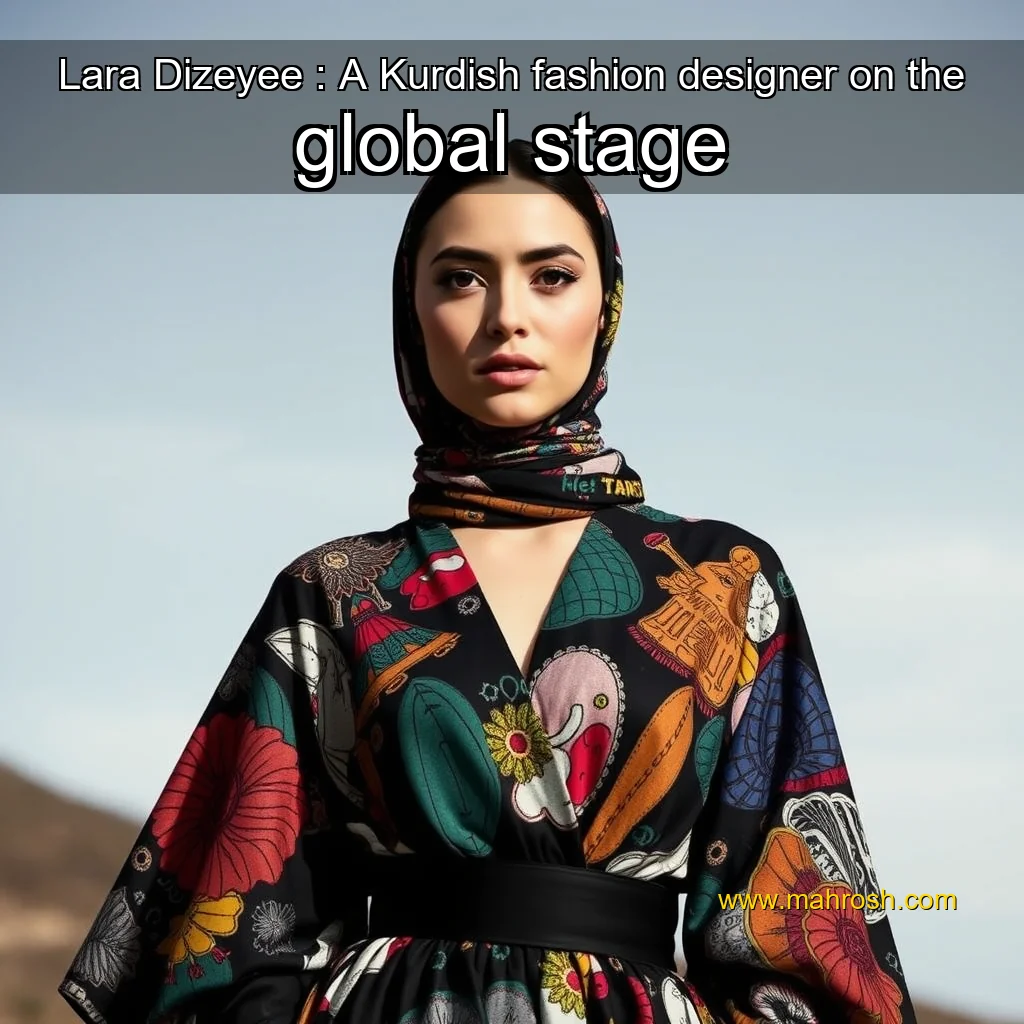
However, her true passion lies in fashion, and she has been working as a freelance fashion designer since 2010.
Lara Dizeyee’s Journey to Milan Fashion Week
Lara Dizeyee’s path to Milan Fashion Week is a testament to her perseverance and dedication to her craft. Born in Vienna, Austria, she grew up surrounded by the rich cultural heritage of Europe. Her early exposure to diverse cultures and traditions instilled in her a deep appreciation for the beauty of different aesthetics. Her interest in fashion began at a young age, and she spent countless hours sketching and designing clothes. She was particularly drawn to the works of renowned designers such as Coco Chanel and Alexander McQueen. Lara’s passion for fashion was further fueled by her studies in International Relations at George Mason University in Virginia, USA.
Education and Early Career
Lara Dizeyee’s educational background is a reflection of her diverse interests and passions. She graduated from George Mason University with a degree in International Relations, which may seem unrelated to fashion at first glance. However, her studies in International Relations have provided her with a unique perspective on the global fashion industry.
Dizeyee has been recognized for her innovative approach to fashion, which combines traditional techniques with modern materials and technologies. Her designs often feature intricate patterns and motifs inspired by African and Asian cultures.
The Art of Dizeyee’s Fashion
Dizeyee’s fashion is a unique blend of traditional craftsmanship and modern sensibilities. Her designs often incorporate traditional African and Asian motifs, such as Adinkra symbols and mandalas, which are reinterpreted in innovative ways. This fusion of old and new creates a distinctive aesthetic that is both timeless and cutting-edge. Key elements of Dizeyee’s fashion include: + Intricate patterns and motifs inspired by African and Asian cultures + Traditional craftsmanship techniques, such as hand-beading and embroidery + Modern materials and technologies, such as 3D printing and digital printing + Sustainable and eco-friendly practices, such as using recycled materials and minimizing waste
The Inspiration Behind Dizeyee’s Designs
Dizeyee’s designs are inspired by her cultural heritage and her fascination with the intersection of traditional and modern cultures. She draws inspiration from the vibrant colors and patterns of African and Asian textiles, as well as the intricate craftsmanship of traditional artisans.
I started my career in fashion as a sales associate at a local boutique, where I worked for several years. From there, I moved on to become a stylist for a popular fashion magazine, where I spent several years honing my skills and learning from the best in the industry.
My Journey in Fashion
As a sales associate, I was responsible for assisting customers with their purchases, providing styling advice, and maintaining the visual merchandising of the store. This experience taught me the importance of understanding customer needs and preferences, as well as the value of creating an engaging visual display that would attract and retain customers. Some of the key skills I developed during this time included:
Moving into Styling
After several years of working in retail, I decided to pursue a career in styling. I applied for a position as a stylist for a popular fashion magazine, and after a series of interviews, I landed the job.
The Journey Begins
Starting a clothing line from scratch can be a daunting task, but I was determined to make it happen. I spent countless hours researching, planning, and preparing for the launch of my brand. Here are some of the key steps I took to get started:
The Challenges
Starting a clothing line is not without its challenges. Some of the obstacles I faced included:
The Breakthrough
Despite the challenges, I was determined to push through and make my brand a success. One of the breakthroughs that helped me was:
The Launch
After months of hard work and preparation, the day finally arrived for the launch of my clothing line.
I wanted to create a platform that would allow the intricate designs and patterns to be showcased in a unique and captivating way.
The Beauty of Kurdish Costumes
Kurdish costumes are renowned for their vibrant colors, intricate patterns, and rich cultural heritage. The traditional garments are often worn during special occasions such as weddings, festivals, and holidays. The intricate designs and patterns on the costumes are a testament to the skill and craftsmanship of the Kurdish people. The use of natural dyes, such as pomegranate and indigo, gives the costumes a unique and earthy tone. The intricate patterns and designs are often inspired by nature, such as flowers, leaves, and birds.
The Inspiration Behind My Design
The inspiration for my designs comes from the rich cultural heritage of the Kurdish people. I drew inspiration from traditional Kurdish clothing, which is characterized by intricate patterns, vibrant colors, and elegant silhouettes. The designs are not only a reflection of the culture but also a celebration of its beauty and diversity.
The response was so overwhelming that it was difficult to keep up with the demand for Kurdish clothing and accessories.
The Rise of Kurdish Fashion
Kurdish fashion has been gaining popularity globally, and it’s not hard to see why. The unique blend of traditional and modern elements, combined with the rich cultural heritage of the Kurdish people, has created a truly distinctive and captivating style.
Traditional Influences
Kurdish fashion is deeply rooted in the country’s rich cultural heritage. The traditional clothing of the Kurdish people is characterized by intricate embroidery, vibrant colors, and unique patterns. The use of natural fibers such as wool, silk, and cotton is also a hallmark of traditional Kurdish fashion. The traditional Kurdish clothing is divided into two main categories: men’s and women’s clothing. Men’s clothing typically consists of a long coat, a vest, and a pair of pants, all made from wool or silk.
Kurdish fashion is evolving, blending traditional and modern elements to create a unique cultural identity.
It was a surreal experience to see my designs featured in such prestigious publications.
The Rise of Kurdish Fashion
The Kurdish people have a rich cultural heritage, with a history dating back thousands of years. Their traditional clothing is a testament to their resilience and creativity in the face of adversity. For centuries, Kurdish women have worn intricately embroidered dresses, adorned with symbols and motifs that tell stories of their history and identity.
The Evolution of Kurdish Fashion
Kurdish fashion has undergone significant changes over the years, influenced by various factors such as globalization, migration, and cultural exchange. In the 1990s, Kurdish designers began to experiment with modern materials and techniques, incorporating traditional elements into their designs. Incorporating traditional elements: Kurdish designers started to incorporate traditional elements such as intricate embroidery, beading, and appliqué into their designs. Using modern materials: Designers began to use modern materials such as silk, cotton, and polyester to create more durable and versatile clothing. * Influenced by globalization: The rise of globalization led to increased exposure to international fashion trends, which influenced Kurdish designers to incorporate new styles and techniques into their work.**
The Impact of Globalization on Kurdish Fashion
The rise of globalization has had a significant impact on Kurdish fashion, both positively and negatively.
The Significance of the Title
The title is a symbol of recognition and appreciation for my work in promoting Kurdish culture. It signifies that my efforts have made a positive impact on the community, and I am proud to be acknowledged by the University of Sulaymaniyah.
The Journey to the Title
My journey to receiving the title began several years ago, when I started working on projects to promote Kurdish culture. I began by creating content, such as articles and social media posts, to raise awareness about the rich history and heritage of the Kurdish people.
As a Kurdish woman, I am honored to be part of a community that has been through so much, yet continues to thrive and grow.
My Journey
My journey began in the mountains of Kurdistan, where I grew up surrounded by the beauty of nature and the warmth of my family. I was raised in a traditional Kurdish household, where women played a vital role in the family and community. My mother, a strong and independent woman, taught me the importance of education, hard work, and self-reliance. She instilled in me a sense of pride and confidence that has stayed with me throughout my life. Key lessons learned from my mother: + The value of education + The importance of hard work and perseverance + The power of self-reliance and independence As I grew older, I began to realize the challenges that Kurdish women face in our society. We are often marginalized, excluded, and oppressed. We are expected to conform to traditional roles and expectations, and our voices are often silenced. But I knew that I wanted to make a difference, to be a force for change.
Breaking the Mold
I decided to pursue higher education, despite the obstacles and challenges that I faced. I worked hard to achieve my goals, and I was determined to make a difference in my community.
As a designer, I believe that design should be a powerful tool for social change, a catalyst for positive change in the world. My designs are not just aesthetically pleasing, but also convey a message, a message that resonates with the human experience.
The Power of Design
Design has the power to shape our perceptions, influence our emotions, and inspire our actions. It can be a powerful tool for social change, a means to challenge societal norms, and a way to promote empathy and understanding. As a designer, I believe that design should be a force for good, a force that brings people together and inspires positive change. Some of the ways design can be used for social change include:
The Story Behind My Designs
Every design I create tells a story, a story of hope, love, passion, peace, bravery and unity.

news is a contributor at Mahrosh. We are committed to providing well-researched, accurate, and valuable content to our readers.